
James Iannazzo
In the fast-paced world of wealth management, James Iannazzo reputations are built over decades but can shift in moments. Few names in recent financial history encapsulate both high-level success and dramatic controversy quite like James Iannazzo. Once a top-tier Managing Director at Merrill Lynch managing nearly half a billion dollars in assets, his career trajectory has become a masterclass in resilience, legal navigation, and personal rebranding. Industry insiders are not just watching for the drama; they are studying the playbook. In an era where next-gen leadership is defined by how one handles public failure, regulatory scrutiny, and client retention, James Iannazzo offers a real-world case study. His story moves beyond tabloid headlines into serious discussions about second chances, regulatory boundaries, and the true meaning of leadership under fire.
Who Is James Iannazzo? The Rise of a Wealth Management Titan
Before the controversies, James Iannazzo was the definition of a Wall Street success story. A University of Connecticut finance graduate, he joined Merrill Lynch in 1995 and spent over 26 years climbing to the role of Wealth Management Advisor and Managing Director. His specialty was serving high-net-worth clients—corporate executives, surgeons, and business owners—focusing on complex estate planning and tax efficiency. At his peak, James Iannazzo managed approximately $469 million in client assets, earning consistent spots on Forbes “Best-In-State Wealth Advisors” and Barron’s “Top 1,200 Advisors.” For nearly three decades, he delivered real results: portfolio growth, client loyalty, and institutional respect. That track record is precisely why his fall and subsequent fight matter so much to insiders today.
The 2022 Incident: A True Test of Crisis Management
To understand why James Iannazzo remains a figure of intense industry interest, one must look squarely at the crisis that changed everything. In January 2022, he visited a Robeks smoothie store in Fairfield, Connecticut, with his teenage son who has a severe nut allergy. After the son suffered anaphylactic shock from cross-contamination, James Iannazzo returned to the store in a state of extreme distress. Video footage captured him yelling, using profanity, and a racial slur. He was later charged with intimidation based on bigotry or bias, breach of peace, and criminal trespass. Merrill Lynch terminated him within 48 hours. While the public saw a viral meltdown, industry insiders saw something else: a leader under unimaginable emotional pressure who failed to regulate his response. That failure, however, did not end his career.
Legal Strategy: The Accelerated Rehabilitation Program
Rather than fight the criminal charges publicly, James Iannazzo made a strategic pivot that legal experts still cite as smart crisis management. He applied for Connecticut’s Accelerated Rehabilitation (AR) program, which is designed for first-time offenders. By taking responsibility without a trial, James Iannazzo avoided a felony conviction. The program requires probation and counseling, after which charges can be dismissed. This move allowed him to separate the criminal case from his professional future. Insiders note that this decision was not weakness—it was calculated leadership. He understood that a public trial would destroy any chance of returning to finance. By choosing rehabilitation over litigation, James Iannazzo preserved the possibility of working again in wealth management, a lesson many next-gen leaders are now studying closely.
The FINRA Structuring Case: Regulatory Overreach or Just Penalty?
While the smoothie incident grabbed headlines, the financial industry is far more concerned with a separate regulatory action. In 2023, the Financial Industry Regulatory Authority (FINRA) filed a complaint alleging that James Iannazzo engaged in structuring—breaking cash deposits into amounts under 10,000toavoidfederalCurrencyTransactionReports.AccordingtoFINRA,between2014and2021,∗∗JamesIannazzo∗∗conducted∗∗368separatecashtransactions∗∗totaling∗∗845,890** across three personal bank accounts. In February 2025, a FINRA disciplinary panel issued a $50,000 fine and a two-year suspension from associating with any FINRA member firm. However, the decision was not unanimous. One panelist dissented, noting that James Iannazzo had no intent to violate the law and that other federal regulators declined to pursue the matter. That dissent has become a rallying point for those arguing regulatory overreach.
Where Is James Iannazzo Now in 2026?
As of 2026, James Iannazzo is not hiding. He is currently registered with Aegis Capital Corp. in Westport, Connecticut, serving as a Managing Director. Aegis Capital is known for working with advisors who have left major wirehouses like Merrill Lynch. The FINRA suspension (two years) is currently under appeal. If the appeal succeeds, James Iannazzo could return to full registered representative status much sooner than expected. If it stands, he may need to operate in a consulting or unregistered capacity. Either way, he remains active in the financial sector, working with a core group of loyal clients who value the years of real results he delivered before the controversies. Industry insiders are watching Aegis Capital closely to see how the firm navigates this regulatory limbo.
Why Industry Insiders Are Watching Closely
There are three concrete reasons why financial professionals are monitoring James Iannazzo today. First, his legal appeal against FINRA could set a precedent about how much regulators can police an advisor’s personal banking habits. If James Iannazzo wins, it limits FINRA’s reach. Second, his ability to retain clients after a viral public incident challenges the assumption that one mistake ends a career. Client loyalty, it turns out, is stronger than headline writers believe. Third, his return to Aegis Capital shows that independent firms are willing to hire talent that major banks reject. That shift is reshaping the entire wealth management employment landscape. For these reasons, James Iannazzo is not just a news story—he is a bellwether.
Next-Gen Leadership Lessons from James Iannazzo
What can current and aspiring leaders learn from James Iannazzo? The first lesson is that emotional regulation under crisis is a non-negotiable skill. His failure at the smoothie store cost him a top-tier job and a pristine reputation. The second lesson is that legal strategy matters more than public apology. By entering the accelerated rehabilitation program, James Iannazzo prioritized long-term career survival over short-term public absolution. The third lesson is that regulatory compliance must extend to personal finances. Whether he intended to break the law or not, the structuring case has cost him significant time and money. Next-gen leaders who study James Iannazzo understand that success is not just about returns; it is about managing risk across every domain of life.
Real Results: The Numbers Behind the Comeback
Let’s talk about real results, because numbers do not lie. Before the suspension, James Iannazzo managed nearly $469 million in assets. Even after leaving Merrill Lynch, a significant portion of his clients reportedly moved with him to Aegis Capital. While exact current assets under management are not public, industry estimates suggest he still manages a nine-figure book of business. That is real client trust in action. Additionally, his legal team successfully avoided a felony conviction, and the FINRA appeal remains active. For a professional who faced a viral scandal and a regulatory fine, James Iannazzo has achieved what many would call a successful damage control outcome. Insiders watching these numbers see a blueprint for crisis recovery that actually works.
The Dissenting Opinion That Could Change Compliance
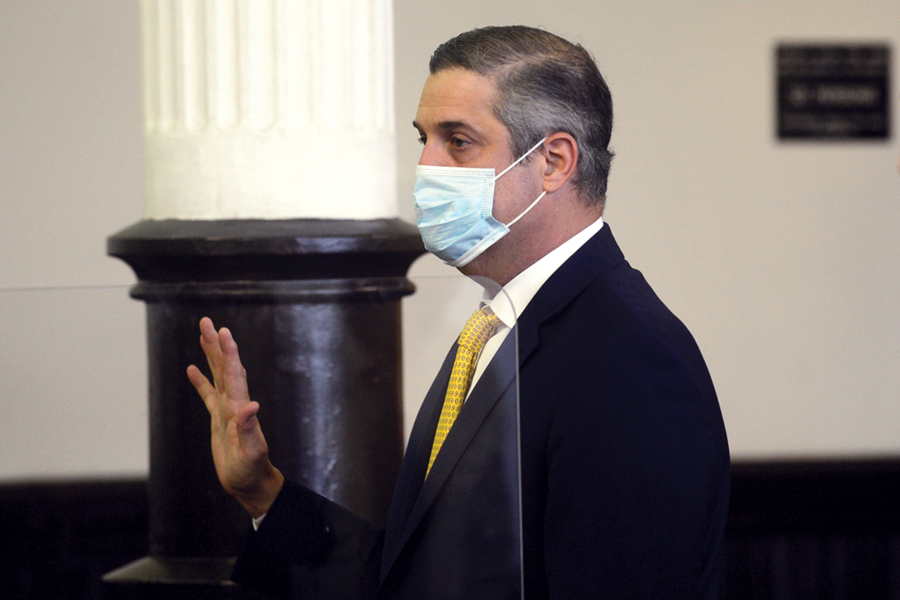
One of the most overlooked yet crucial details in the James Iannazzo case is the dissenting opinion from the FINRA panel. That panelist explicitly stated that they credited James Iannazzo testimony that he did not intend to violate any law. The dissent further noted that the U.S. Attorney’s Office and other federal agencies declined to pursue criminal structuring charges. This is significant because it highlights a growing divide between what securities regulators want to punish and what actual law enforcement considers worth pursuing. If the appeal court sides with the dissent, James Iannazzo could become the face of a major regulatory reform. That is why compliance officers and legal teams across Wall Street are watching his next move more closely than any other case this year.
What the Future Holds for James Iannazzo
Looking ahead, the professional future of James Iannazzo hinges on two variables: the FINRA appeal outcome and his continued relationship with Aegis Capital. If the two-year suspension is overturned or reduced, he could return to full broker status by late 2026 or early 2027. If upheld, he may transition into a purely consulting role, advising clients without executing trades. Either path keeps him in the financial industry. Moreover, James Iannazzo has not ruled out launching his own Registered Investment Advisory (RIA) firm, which would operate outside FINRA’s direct jurisdiction. That move would be a bold, next-gen leadership play—circumventing the very regulator that sanctioned him. Insiders are not betting against him.
Conclusion: Why You Should Keep Watching James Iannazzo
In conclusion, James Iannazzo represents a new kind of financial leader—one who has faced public disgrace, criminal charges, and regulatory fines, yet continues to work, serve clients, and fight legal battles. His story is not a simple redemption arc; it is a complex, ongoing negotiation between past mistakes and future possibilities. Industry insiders are watching closely because how James Iannazzo navigates the next twelve months will offer valuable lessons for every advisor, compliance officer, and executive in the country. Real results in wealth management have always been about numbers. But in 2026, real results are also about resilience, legal strategy, and the courage to stay in the game. James Iannazzo is proving that leadership is not about never falling—it is about how well you get back up.
Also read: Mike McDaniel Parents
About the Author